Although the human body possesses various abilities to perceive environmental pollutants, it often fails to promptly capture the stimulus signals after exposure or cannot form perceptual information until symptoms appear. For example, the human body has the endotoxin receptor TLR4. Inhalation exposure can silently trigger a series of biological reactions, producing inflammatory biomarkers, ultimately progressing to the appearance of clinical symptoms. Currently, early disease identification still primarily relies on protein biomarkers, but this often occurs only after pathological changes have already taken place in the body. If disease signals could be detected before proteins are expressed in large quantities, it could facilitate early treatment or rapid bodily repair.
The team of Professor Mao-Sheng Yao from Peking University has long been dedicated to the perception and health effects of airborne pollutants. In earlier research, the team discovered that when rats were exposed to air pollutants such as endotoxins, ricin, and ozone, characteristic volatile organic compound (VOCs) fingerprints corresponding to the pollutants rapidly appeared in their exhaled breath. Heptanal in exhaled breath was found to be significantly correlated with ozone exposure. Monitoring changes in these fingerprints could enable real-time warnings of air toxicity. During the COVID-19 pandemic, the team also found that after SARS-CoV-2 aerosols entered the human body, they interfered with metabolic activities, causing the release of specific VOCs fingerprints in exhaled breath, such as changes in acetone and isopropanol. Combined with machine learning, the detection sensitivity reached 95%. Their latest population study also found that propanol and isoprene in exhaled breath could serve as biomarkers for exposure to haze pollution. These findings from animal and human studies indicate that VOCs monitoring can provide real-time early warning of living organism exposure to pollutants, sounding an alarm like a "smoke alarm" when disease symptoms occur or harm is inflicted.
To investigate the biological mechanisms underlying the production of characteristic VOCs induced by pollutant exposure, Professor Mao-Sheng Yao's team conducted this study focusing on VOCs released by cells. The research utilized‘Saccharomyces cerevisiae’ as the model organism, chosen due to the high homology in fundamental metabolic pathways between yeast cells and human cells. Lipopolysaccharide (LPS, endotoxin) was employed to simulate external environmental exposure stimuli. Through experiments including growth curve analysis, cell viability assays, and confocal microscopy, the stress response and interactions of yeast cells to LPS were clearly demonstrated (Figure 1). Significant differences were observed between the LPS group and the control group in growth trends, survival rates, budding rates, and intracellular reactive oxygen species, intuitively reflecting LPS-induced inhibition of cell proliferation and oxidative stress. Furthermore, by analyzing the aggregation state of fluorescently labeled LPS within the cells, the physiological changes in cells following stimulation were further revealed.
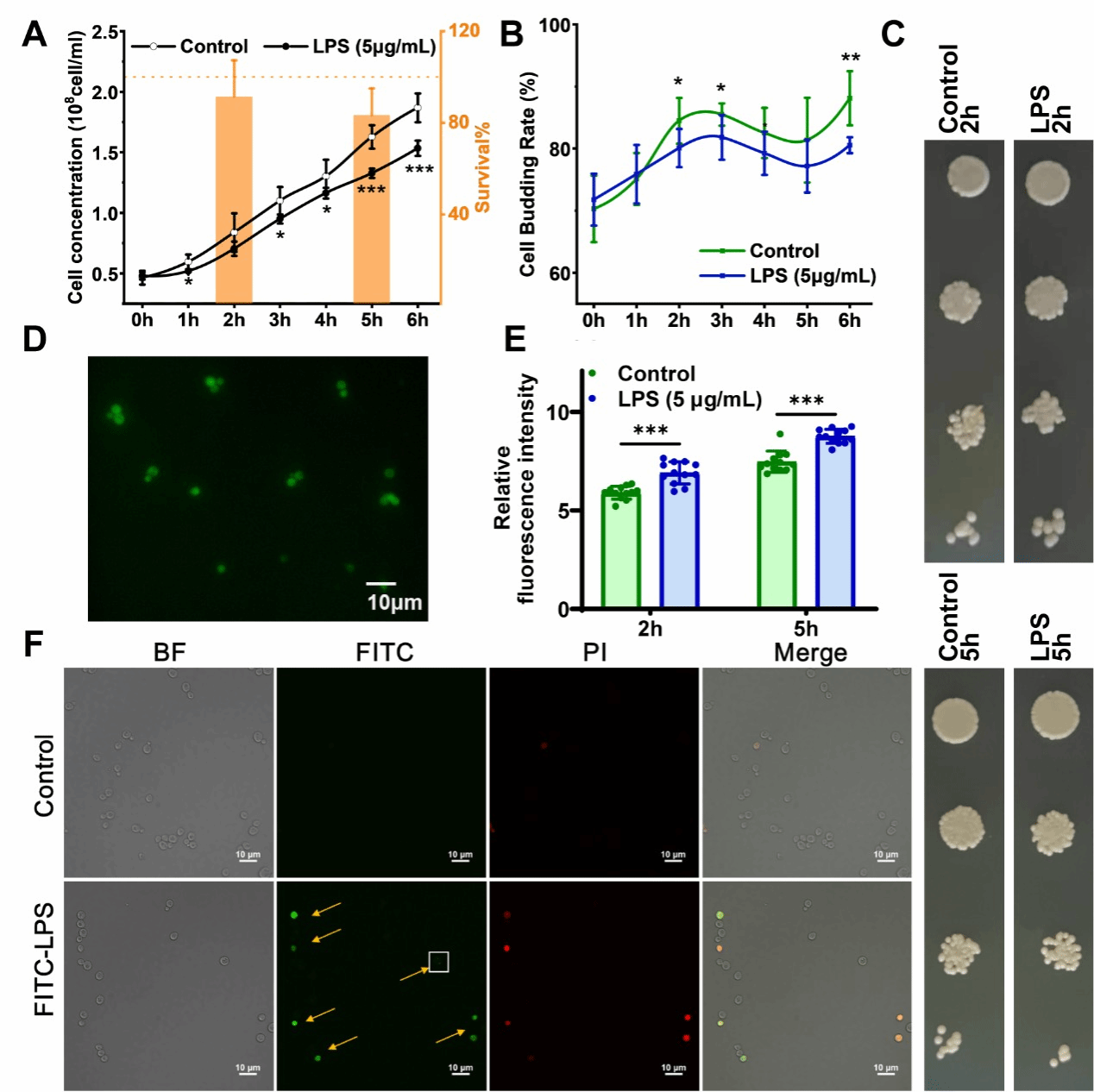
Figure 1. Stress Response and Interaction Induced by Yeast Cell Exposure to LPS
To further validate the concept of a human disease "smoke alarm" at the cellular level, the study employed an integrated design incorporating technologies such as Gas Chromatography-Ion Mobility Spectrometry (GC-IMS) to achieve real-time monitoring of VOCs released by cells—essentially installing "surveillance" on the cells. The results revealed that the types and concentrations of VOCs exhibited distinct phase-specific characteristics after the cells were stimulated (Figure 2). Significant differences in VOCs profiles were observed between the LPS group and the control group at 2 hours and 5 hours post-exposure. Analysis of VOCs release trends and metabolic pathway enrichment studies indicated a dynamic correlation between VOCs emissions and metabolic pathway adjustments. At 2 hours post-exposure, acetic acid-D emerged as the primary characteristic VOCs, primarily involved in pyruvate metabolism. By 5 hours post-exposure, the release of higher alcohols and aldehydes increased significantly, mainly associated with amino acid metabolism-related pathways.
Furthermore, to elucidate the intrinsic mechanisms behind cellular VOCs release, the research team integrated transcriptomics, proteomics, and metabolomics technologies to analyze protein and gene pathways significantly correlated with VOCs expression, constructing a molecular regulatory network of the cellular response to external stimuli (Figure 3). The results demonstrated that the types and concentrations of VOCs displayed clear stage-specific characteristics following cellular stimulation. Acetic acid-D was directly linked to the initiation of the cellular oxidative stress response, serving as an early "molecular signal" emitted by the cells. During the stress response process, cells activated defense mechanisms, accompanied by cell wall remodeling and growth inhibition.At 5 hours post-stimulation, the cells entered an adaptive adjustment phase. In this stage, the cells underwent metabolic reprogramming, converting amino acid metabolism into higher alcohols and aldehydes, thereby releasing characteristic VOCs. Monitoring volatile organic compounds released by cells enables real-time early warning of cellular attacks. With this, Professor Mao-Sheng Yao's team has identified the same phenomenon at the cellular, animal, and human levels: gaseous biomarker fingerprints can provide real-time early warning of changes in the health status of living systems.

Figure 2. Temporal Analysis of VOCs Release and Metabolic Pathways in Yeast Cells after LPS Exposure
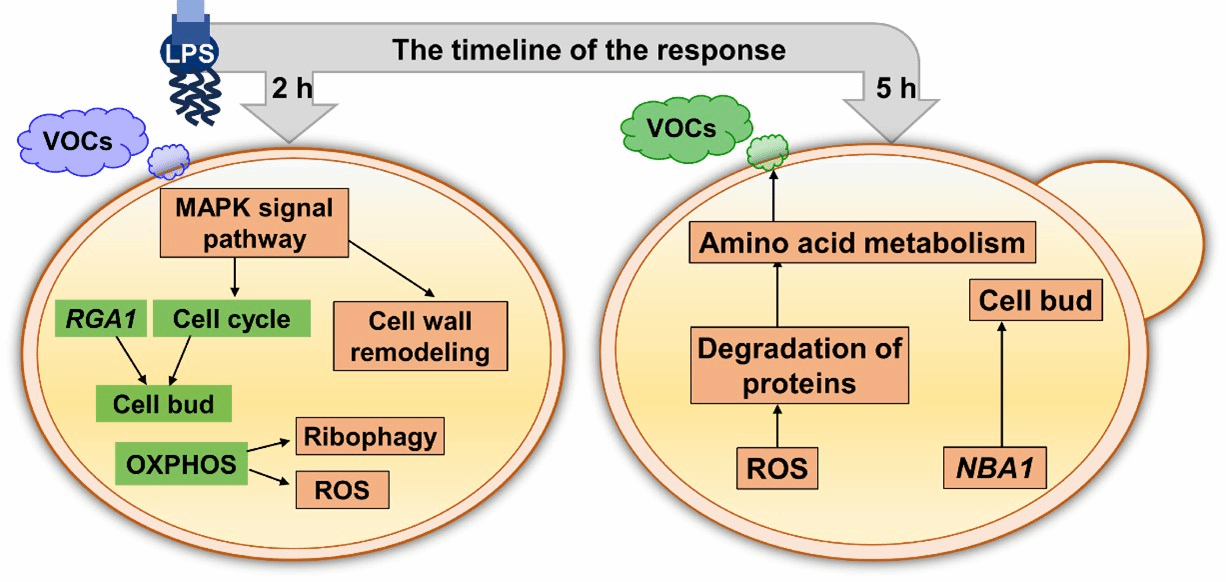
Figure 3. Molecular Mechanisms Underlying the Release of Characteristic VOCs during the Stress and Adaptation Response of Yeast Cells to LPS Exposure
VOCs-based monitoring technology, characterized by its real-time, non-invasive, and highly sensitive nature, can capture subtle changes in cellular metabolism—effectively installing a health "surveillance system" for cells—thereby enabling early warning of foreign substance "invasion" .This study reveals the patterns of VOC release from cells and further confirms the feasibility of VOC-based monitoring for early disease diagnosis.The technology, which assesses pollutant exposure or the health status of living systems via VOCs monitoring, can clearly identify on a timeline when changes occur in cells, animals, or humans, pinpointing the critical time points at which damage occurs. Much like a "smoke alarm" in a kitchen, this technique detects the gaseous biomarker fingerprints released by cells to determine their health status and achieve early warning of abnormalities.While protein biomarkers have long been studied for disease diagnosis or early screening, volatile organic compounds (VOCs) undergo significant changes even before proteins are substantially expressed. In the future, monitoring gaseous biomarkers released by living systems is expected to serve as a genuine "smoke alarm" for human diseases, thereby potentially nipping illnesses in the cradle.
The research findings have been published in the American Society for Microbiology (ASM) journal Applied and Environmental Microbiology(established in 1976) under the title "Time-resolved monitoring of yeast responses to lipopolysaccharide exposure by cell-released volatile organic compounds" (https://journals.asm.org/doi/10.1128/aem.00785-25) The paper's first author is Liu Huaying, a Ph.D. candidate in the College of Environmental Sciences and Engineering at Peking University, with Professor Mao-Sheng Yao from Peking University serving as the corresponding author. This project was primarily supported by the National Natural Science Foundation of China Innovative Research Group Project (Grant No. 22221004) and the Guangzhou National Laboratory Project (SRPG22-007).





 学校官网
学校官网  中文站
中文站  搜索
搜索