From April 11 to 13, 2025, "The 7th Seminar on Prevention and Control of Atmospheric Ozone Pollution" was successfully held in Hefei. Guided by the Administrative Center for China's Agenda 21, the event was hosted by Peking University, the Hefei Institutes of Physical Science of the Chinese Academy of Sciences (CAS), and the Ozone Pollution Control Professional Committee of the Chinese Society for Environmental Sciences. It was organized by the Anhui Institute of Optics and Fine Mechanics of CAS, the Environmental Research Institute of Hefei Comprehensive National Science Center, the College of Environmental Sciences and Engineering of Peking University, the Key Laboratory of Atmospheric Ozone Pollution Prevention of the Ministry of Ecology and Environment, the Key Laboratory of Environmental Optical Monitoring Technology of the Ministry of Ecology and Environment, and the Institute of Carbon Neutrality of Peking University. Co-organizers included Nanjing University of Information Science and Technology, the Atmospheric Environment Branch of the Chinese Society for Environmental Sciences, The Hong Kong University of Science and Technology (Guangzhou), and the Energy Foundation.
Under the theme "Ozone Pollution Prevention and Control in the Context of Coordinated Responses to Air Quality and Global Change," the seminar attracted nearly 600 participants, including 14 academicians in the field of atmospheric pollution prevention and control in China, as well as renowned scholars, government administrators, technical experts, and enterprise representatives from over 170 institutions across various provinces, municipalities, and autonomous regions.
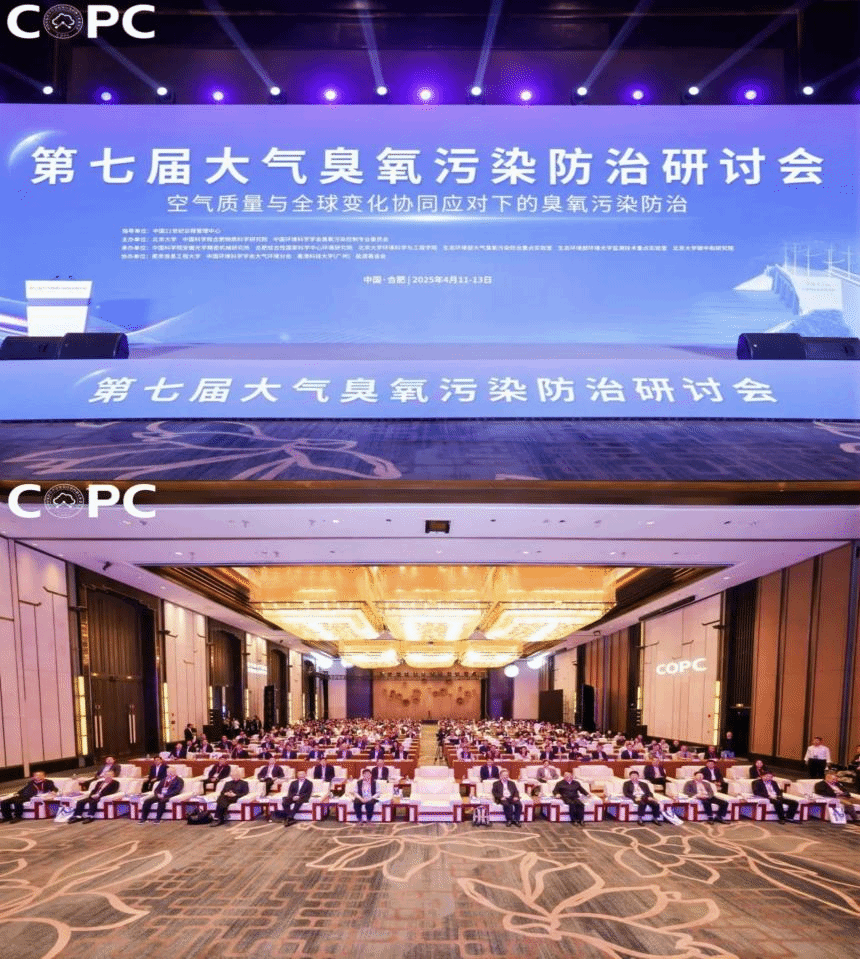
Distinguished guests attending and addressing the opening ceremony included: Sun Yong, Vice Governor of the People's Government of Anhui Province; Yang Long, Deputy Director General of the Department of Atmospheric Environment of the Ministry of Ecology and Environment; Wang Lei, Director of the Ecology and Environment Division of the Administrative Center for China's Agenda 21; Xia Zuyi, Vice Chairman and Secretary-General of the Chinese Society for Environmental Sciences; Luo Yunfeng, Deputy Secretary of the Hefei Municipal Committee and Mayor of Hefei; Yu Hanqing, Academician of the Chinese Academy of Engineering and Professor at the University of Science and Technology of China; and Liu Jianguo, President of the Hefei Institutes of Physical Science, Chinese Academy of Sciences. The opening ceremony was chaired and presided over by Zhang Yuanhang, Academician of the Chinese Academy of Engineering and Professor of Peking University.

The conference invited renowned experts to present keynote reports, including: Academician Zhang Xiaoye from the Chinese Academy of Meteorological Sciences; Academician Liu Wenqing from the Hefei Institutes of Physical Science, Chinese Academy of Sciences; Academician Wang Qiao from the Satellite Environment Application Center of the Ministry of Ecology and Environment; Academician Gao Xiang from Zhejiang University of Technology; Academician Kan Haidong from Fudan University; Liu Bingjiang, former Chief Engineer of the Ministry of Ecology and Environment; Academician He Kebin from Tsinghua University; Academician Chen Jianmin from Fudan University; and Academician Zhang Yuanhang from Peking University.By gathering top experts in the field of atmospheric science, the conference collectively explored the directions and pathways for ozone pollution prevention and control under the coordinated response to air quality and global change, comprehensively advancing academic development and management practices related to atmospheric ozone pollution control in China.The keynote reports were chaired by Academician Song Junqiang from the National University of Defense Technology, Academician Wang Hualin from East China University of Science and Technology, and Academician He Hong from the Research Center for Eco-Environmental Sciences, Chinese Academy of Sciences.

The conference featured parallel sessions with six thematic sections, covering topics including: observation and simulation of atmospheric oxidation capacity; evolution and source apportionment of ozone and PM₂.₅ pollution; health and ecological risks of ozone pollution; extreme climate and pollution events; theories and technologies for the synergistic control of ozone and PM₂.₅ pollution; and strategies and pathways for the coordinated management of sustained air quality improvement and climate change. These sessions aimed to build consensus, share insights, promote disciplinary development and technological innovation, support the continuous improvement of China's ambient air quality, and contribute to building a Beautiful China.Additionally, the conference specially included two forums for young scholars, facilitating academic exchange through outstanding youth thesis presentations. Renowned experts in the field were invited to engage in discussions with young scholars, promoting their academic and professional development. Awards for outstanding presentations and outstanding posters were presented.The conference also hosted the signing ceremony for strategic cooperation agreements of the Environmental Research Institute of the Hefei Comprehensive National Science Center, providing a broader platform for collaboration and exchange among experts, scholars, and management personnel.

The closing ceremony was presided over by Researcher Xie Pinhua from the Anhui Institute of Optics and Fine Mechanics, Chinese Academy of Sciences. Academicians He Hong and Chen Jianmin presented awards to the students who received the Outstanding Presentation awards in the youth forum. Academician Yu Shaocai and President Liu Jianguo presented awards to the students who received the Best Poster awards. Academicians Liu Wenqing and Zhang Yuanhang presented awards to the gold sponsor organizations.
Academician Zhang Yuanhang, Director of the Ozone Professional Committee and Professor of Peking University, delivered the conference summary. First, he expressed his gratitude to all participants. He stated that this seminar demonstrated the significant progress China has made in the prevention and control of ozone pollution and the synergistic control of ozone and PM₂.₅. Theoretical innovations continue to emerge, technological breakthroughs have achieved remarkable results, and regional practices have also yielded considerable successes.Second, he pointed out that the Committee has three key tasks for this year. First, it will continue to hold the Ozone Pollution Prevention and Control Seminar next year. Following a decision at the standing committee meeting, the 8th Seminar on Prevention and Control of Atmospheric Ozone Pollution will be held in Lanzhou, Gansu Province. Lanzhou is the city where Chinese scientists first conducted research on photochemical smog and its control. He expressed hope that the conference in Lanzhou would further promote in-depth research on the sources, transformation mechanisms, and environmental effects of atmospheric components, with a focus on atmospheric oxidation capacity, thereby fully supporting the national transition from focused remediation to systematic governance in air pollution prevention and control.Second, the Committee will prioritize advancing ozone pollution prevention and control. It will continue to focus on and promote knowledge and key technologies related to the theory, technology, and regional practices of ozone pollution prevention and control. A working group will be established to compile a new edition of the Ozone Pollution Prevention and Control Blue Paper. This document will systematically review core scientific advances in the synergistic control of ozone and multiple atmospheric pollutants in recent years, comprehensively summarize full-chain research achievements from pollution source apportionment and transmission mechanisms to monitoring, early warning, and control technology systems, with special attention to groundbreaking, strategically guiding innovative theories and practical applications.Third, he hopes that participants will work together to promote understanding and practices for accelerating ozone pollution prevention and control across various regions and levels in China, fostering broad social consensus, scientific consensus, and management consensus. Only on this basis can measures be scientifically sound and their implementation effective.Finally, Academician Zhang Yuanhang expressed his sincere gratitude to the units and volunteer teams that prepared and organized the conference. He then handed over the conference flag to the organizing institution of the 8th Ozone Conference, Lanzhou University of Technology. Professor Wang Guoying from Lanzhou University of Technology received the flag and delivered a speech.


The successful convening of this conference has enhanced communication and cooperation in the field of atmospheric ozone pollution prevention and control in China. It has brought together wisdom and strengths from multiple stakeholders, facilitating in-depth discussions on theoretical research, key technologies, and management practices. The conference provided theoretical and technical support for advancing ozone pollution control, strengthening the synergistic control of multiple pollutants, and promoting joint regional prevention and control of pollution. These efforts contribute to the continuous improvement of ambient air quality and support the building of a Beautiful China.




 学校官网
学校官网  中文站
中文站  搜索
搜索